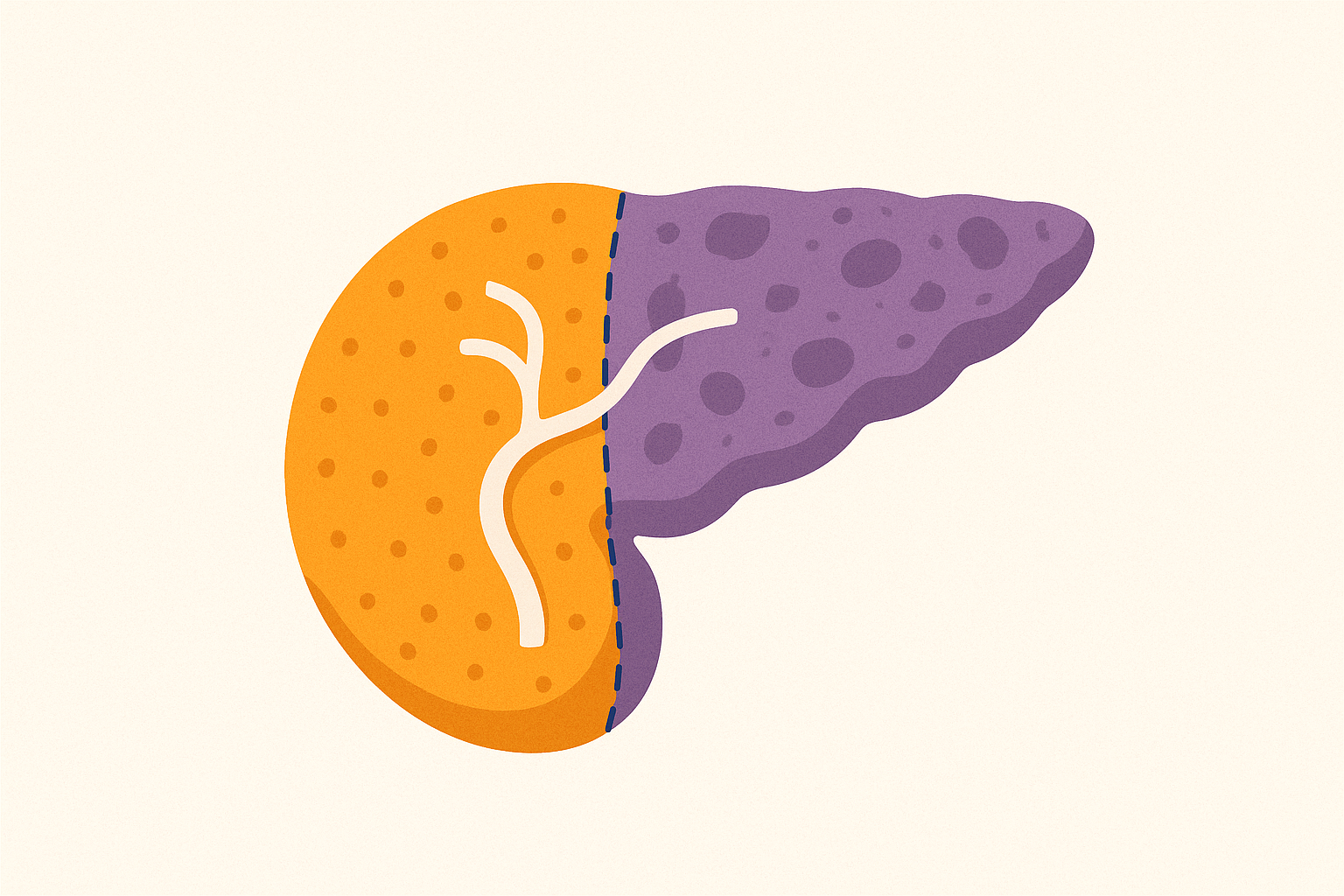
Pancreatic Disease
The pancreas plays a key role in digestion by producing enzymes that help break down food and hormones (such as insulin) that regulate blood sugar levels.
Pancreatic disorders, such as chronic pancreatitis, pancreatic exocrine insufficiency or pancreatic cancer, can reduce the pancreas’s ability to work properly. This may lead to difficulties digesting and absorbing nutrients, resulting in uncomfortable symptoms and long-term health risks if not managed.
Why It Matters
When the pancreas isn’t working properly, it can lead to:
Abdominal pain, bloating, or diarrhoea
Fatty or oily stools (steatorrhoea)
Unplanned weight loss
Poor absorption of essential nutrients
Deficiencies in fat-soluble vitamins (A, D, E, K)
Loss of strength, fatigue, and reduced quality of life
With the right dietary management and medical support, many of these issues can be reduced or prevented.
Who This Service Is For
This service is designed for adults who have been diagnosed with, or are being investigated for, a pancreatic condition and are :
Experiencing digestive symptoms such as diarrhoea, bloating, or fatty stools
Struggling to maintain weight despite eating well
Living with chronic pancreatitis, pancreatic cancer, or cystic fibrosis–related pancreatic problems
Taking pancreatic enzyme replacement therapy (e.g. Creon) and how to use it effectively
Unsure whether your diet is providing enough nutrients for your health and recovery
If you are unsure whether this service is right for you, please get in touch and we will be happy to advise.
What to Expect in Your Assessment
During your session, your dietitian will:
Explore your current situation – reviewing your diagnosis, symptoms, lifestyle, and medical background.
Work out your nutritional requirements – estimating your energy, protein, and nutrient needs based on your health, weight, and activity level.
Identify any deficits or risks – such as vitamin deficiencies, malabsorption, or weight loss.
Review your diet and supplements – including how you currently take pancreatic enzyme replacement therapy and whether adjustments are needed.
Provide practical dietary strategies – such as meal planning, food fortification, managing fat intake, and optimising digestion with enzymes.
Liaise with your GP where further investigation may be beneficial-
Agree a personalised plan – tailored steps to help reduce symptoms, improve nutrient absorption, maintain weight, and support your long-term health.
Your plan will be individualised and, where relevant, can be shared with your wider healthcare team for continuity of care.